to my adoring fanbase of 0 people, I deeply apologise for my silence, rest assured that though it may seem as if I’ve taken a hiatus, I’ve actually been hard at work on other worlds which I have now decided to also include here for the sake of having something to post.
though I am doing some cyberpunk work at the moment, my true passion has been medieval fantasy. Tokyo 2077 is a side project, the real meat is in my setting, haphazardly named “The Distant Lands”. I’ve also been using it to run a Mythras campaign or two.
not all of The Distant Lands are developed, the main continent I’m expanding at the moment is called Xanthia. There’s a lot of history and info to go through, but this post is primarily about my recent development of creating star constellations within the world that the denizens could use to navigate or tell fortunes and such.
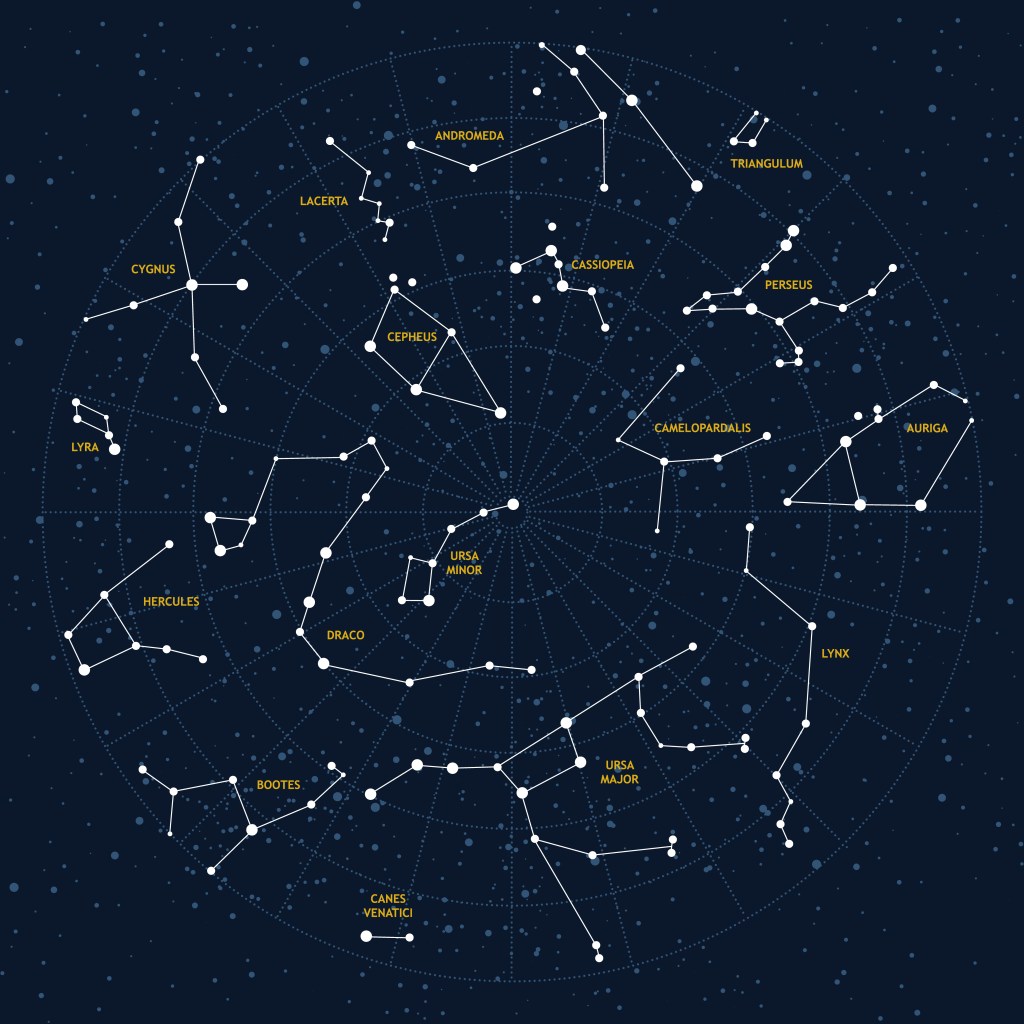
chart of some of our real world constellatins
so how does one develop constellations?
since constellations are consistently visible stars, which us humans have given shape and meanings to, the first thing is to understand what the cosmos of your world looks like. Whether the universe is a solar system, realms connected by a big tree, a titan holding your planet on its back, etc.
I… have not decided this, and that’s definitely gonna come and bite me in the ass later. So do as I say, not as I do.
once you know how it works, you’ll have a deeper idea of why or when constellations should appear. If you care.
and
make things easy for yourself, tie it to the calendar system. Keeps things grounded.
in The Distant Lands, depending on which constellations are most visible, you would be able to discern what time of the year and even month it is.
now the juicy part, how do you decide on how they look and develop the culture behind them?
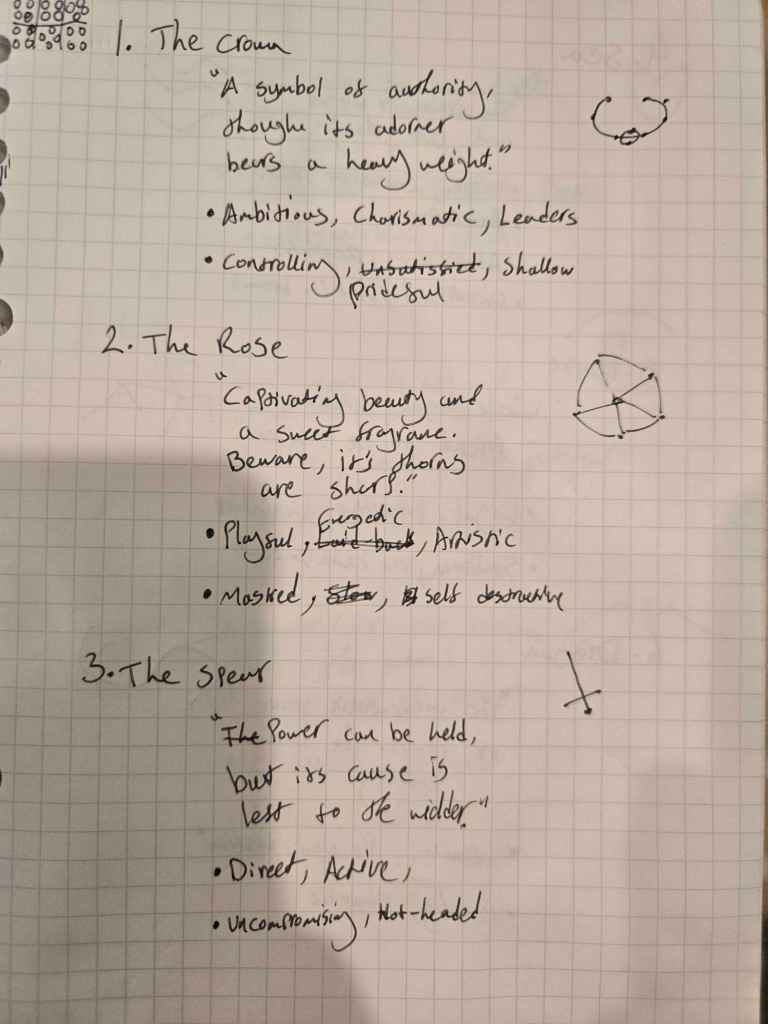
i decided to follow a similar idea as the Chinese zodiac calendar, which tells the story of a mythological race between the 12 animals, the calendar’s order matched the order of the race, and from that story we developed personalities to associate with people’s year of birth.
thirst for power, sacrifice and redemption are core themes in my setting, so I decided to tell the story of a king who wanted to conquer the realm to keep his “rose” safe.
old mythological stories tend to be super barebones, so I just started writing sentences like
“The King promised to go to war for his Rose, with his Spear and Steed, he set to conquer all to the Oceans.”
and so forth.
so, this means that the first constellation is The King, that can work in real life, since we have human-ish representing constellations like Virgo and Saggitarius. But I wanted something simpler, so I decided instead of King, I’d do a Crown. And the constellation can be a semi-circle with an extra star or two around the mid-point to represent a gem or centrepiece.
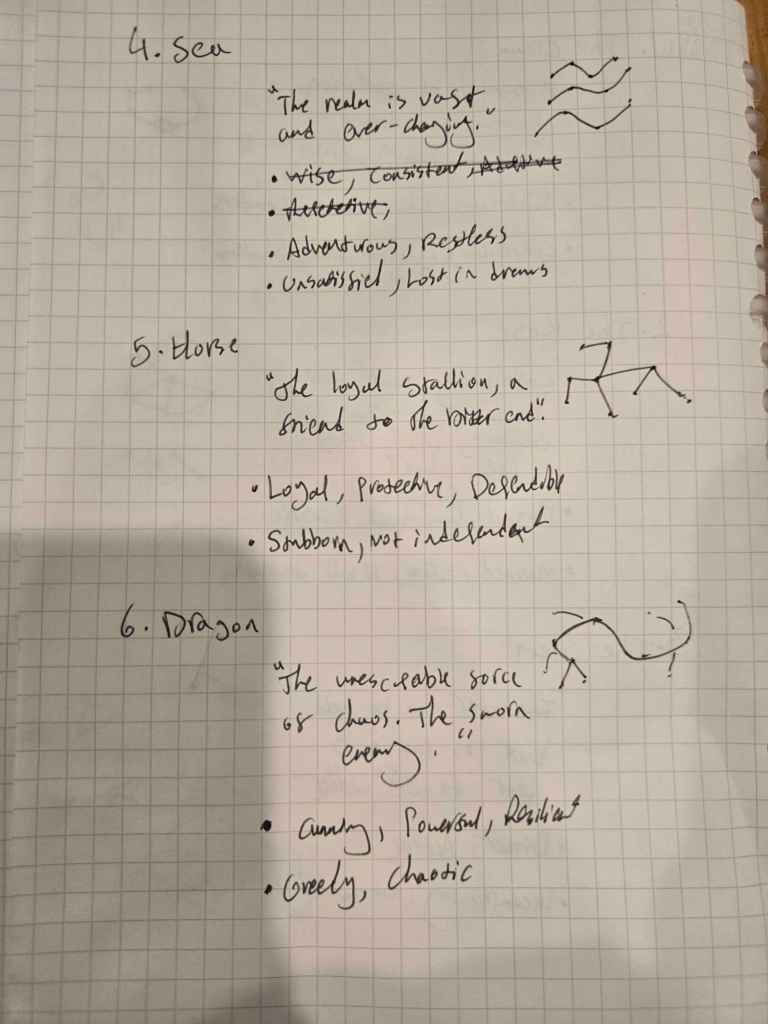
Following similar ideas, my main constellations became as follows:
- the Crown
- the Rose
- the Spear (or some cultures call it the Sword)
- the Steed
- the Sea (sometimes the Ocean)
- the Dragon
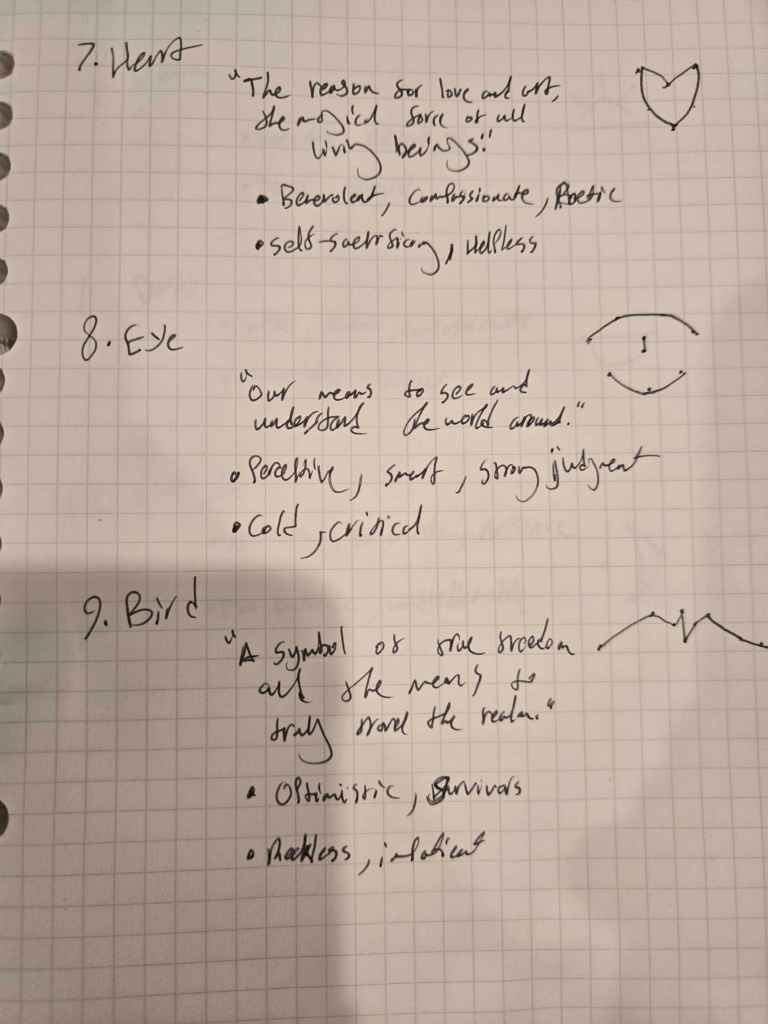
- the Heart
- the Eye
- the Bird
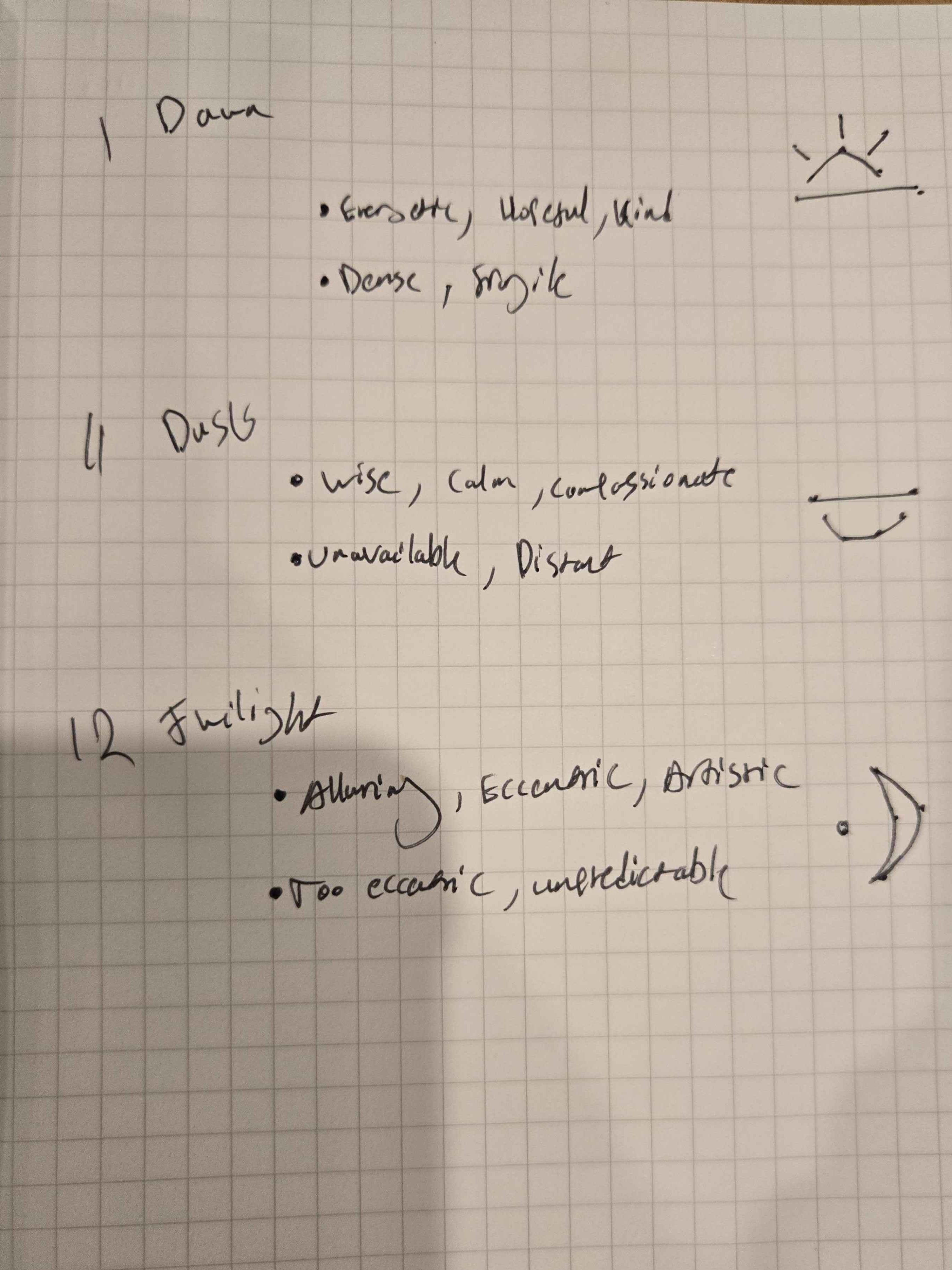
this was too short for the months in my world’s calendar, so I added 3 more to make it 12 months:
- Dawn (as the first month)
- Dusk (11th month)
- Twilight (as the last month)
ancient religions in my setting are based on the skies and stars so using things linked to the sun and moon just made sense. It’s also poetic in a way, it could mean that the realm is doomed to repeat the king’s story so long as the skies are alive.
that style of layered symbolism is what I aim to stumble upon, it makes the world feel ancient and naturally developed. If the foundations are strong, you can derive such symbolism from your own work.
what about other cultures?
Xanthia is a Eurasia-inspired continent, and an empire. Meaning there are many languages and cultures, so not everyone will call these constellations the same name, and through linguistic-nuance, the story and meaning behind it can change.
the main cultures in Xanthia are the pure Xanthian people (I’m a creative genius I know), who are based on ancient Romans and medieval Venetians, Milanese, etc.
then there’s Vassen, inspired by old feudal Germany, and then Bjorlund, basically Nordic-inspired, but less vikings and more knights. Linking them to real cultures keeps things grounded, which I like, though it can come at the cost of creativity.
so here’s the constellations in all the languages, in Xanthia, English is not a language.
| Concept | Xanthian | Vassi | Bjorlic |
|---|---|---|---|
| Crown | Crona | Krone | Krona |
| Rose | Rosa | Rosa | Rosa |
| Spear/Sword | Hasta | Klinge | Sverd |
| Steed | Equs | Hengst | Hestr |
| Sea/Ocean | Mare | Mer | Aegir |
| Dragon | Draco | Drache | Ormr |
| Heart | Cor | Herza | Hjarta |
| Eye | Oculus | Auge | Sýn |
| Bird | Avis | Fugel | Ari |
i took some creative liberties with which words I used, some are old german/norse (and somewhat adjusted), others more modern, but it’s all to tell the story and set the cultures apart.
for example the Bjorlic people end the story with Ari, which means Eagle, not bird. And prefer to use Sýn rather than Auga/Eye, since it means Perspective more than Eyesight or Vision. Even the types of Dragons that can come to mind based on the different words of the cultures can affect the story and legends.
omg whats ur star sign?!
as you may have seen above, every sign also has some characteristics accompanying them. The first bullet point is generally positive and the second is negatives, in a bid to follow our real world astrology sub-culture (idk if something so commonly known even constitutes as a sub-culture, but eh, life could be dream).
it’s not the most in depth, I didn’t put too much thought into it, since I did want it to be up to interpretation whether they are actually true or not. Like we do in the real world.
the kinda completed chart
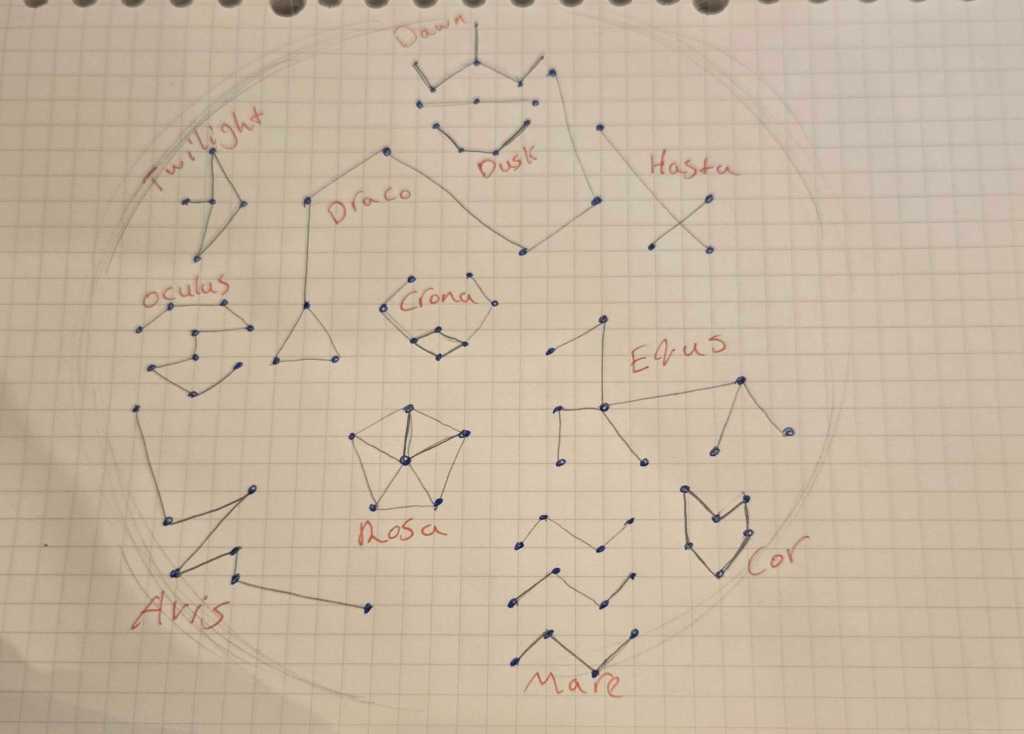
bask in my glory. And awful photography skills. and awful handwriting.
anyway, more of this medieval fantasy stuff coming soon.


Leave a Reply